Showing posts with label CPS. Show all posts

Friday, November 14, 2014

More Questions About IT and How We Keep the Conversation Going

Earlier this year I wrote about how I'd have to bite the bullet and answer my older sons questions about sex. Since then we'be had several questions about sex, but his 9 year old questions aren't what you think they'd be.

My first post on this subject was:

Talking About "IT" with My Kids, Addressing Delicate Subjects Naturally with Kids

He asks me at least once a week: "Mom, can you come to my room (after you put the babies to bed) so we can "talk?" After I put the little ones to bed, I go to his room, seemingly more frequently lately. His questions haven't been about sex acts, except kissing. His questions have been about thoughts, feelings, and other 9 year old curiosity: 

How does kissing feel?
How does sex feel?
Why do people have kids?
Why do we say girls look sexy?

As for the "how does it feel?" Questions, I took the simpler is better approach. Well, it doesnt feel bad because then people wouldnt kiss and we wouldnt make babies. Natures life-cycle would end (appealing to his scientific mind). But of course when you love - trust - respect a special person in your life you do things that feel good. When older son pushed "but HOW does it feel?" 

"Any answer I give IS NOT
 
THE EXACT right answer... but is something. 
And that starts the conversation."


I left it at like kissing mom or our family but way better, because when you lile someone you also feel butterflies in your stomach, and you get alot of excited energy passing in your body. So the excitement + butterflies + just the idea of smooching make a kiss with someone special feel like you dancing on air!

Surprisingly he was quiet. So was I.

We sat on the bed for a long, long moment. And he asked, so how does sex feel? And I said like smooching - with all those emotions following you - but we will talk about sex when your much older. I know your curious, but we have alot of time before you need to know more. (At least I really really hope so!)

Then the girls question came up, not surprisingly. My son hears the Hot Mama conversation at home: my husband often reacts to the HOT ladies on Latin TV "look at those sexy mamas." The boys giggle, dad smiles and its over. In our house sexyness is okay. We teach the kids about their bodies, loving their bodies, and about grooming how they look because my current parenting operating theory is "you are in charge of your body." How you dress, how you look, how you feel about yourself, you own those details - always! And feeling good about how you look is ok. Lovig your body is important. I want our kids to like their good looking body so they keep it healthy, and inorder to do that you need to eat healthy. Admiring other bodies - that look goood - with respect and genuine admiration is okay too. Yelling at women, whistling at men, and yelling to someone on the street "hey sexy mama" is not okay! 

And how do we draw those "appropriate" boundaries for our kids? Talking and talking and talking about it. Conversation hopeully will lead to an understanding of what we believe for our home.

Backfires does happen!

We've told our boys there is no dating until High School. We have heard unfortunately of middle school dating, and even fourth graders saying they have a boyfriend / girlfriend. What "dating" actually occurs for these grades isn't certain, but the kids are still preoccupied with things during class time with topics other then school.

My older son said he "was dared" to ask a girl out, and he did, and she said yes. "So what does that mean? Where will you go? You know you don't have permission to 'go out or date' anyone!" I don't know, he said.

This scenario lead to more CONVERSATIONS! Obviously we've reiterated our rules about dating, talked about how he ended up in this situation, and how to prevent it in the future. Yes this situation is NOT a "big deal" but if I can't talk about these types of subjects with my kids, then I won't be able to discuss simpler things - or serious ones.

He is old enough to ask questions, then he deserves an answer. Any answer I give IS NOT THE EXACT right answer... but is something. And that starts the conversation. 

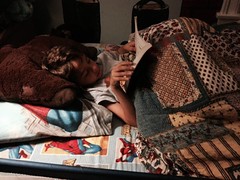
My Son Loves to Read, Buy Why?
My son looks to little to talk ABOUT IT. But he isn't. Now is the time so he can learn
what mommy feels is right for our home. And for him. 


Make Mistakes, breathe, reflect and Laugh.Out.Loud 


Thursday, September 11, 2014

When School Homework is Frustrating... why do it at all?

What is homework for? Is it just there to torture us parents? And our kids. Homework - as my Principal husband reiterated with me every year - is about building study habits. As a secondary element, it's supposed to reinforce what was learned in class that day. I totally understand the idea of building a study habit, because the kids that go to really great high schools don't whine and complain about homework. They also have already built the habit of school books and working at home in elementary school, so when homework is reading in preparation for the next days lesson, kids have the habit of actually doing the reading. (Not like me in high school, winging it from in class notes and not doing the reading.) So I've asked myself is elementary school homework all preparation for High School and college?
I don't always agree with my highly trained hubby. He is brilliant in his work. And he advocates for the children All.The.Time! However, as I am living the parent side of the experience. And I am opinionated, we will often discuss things at home. Poor guy!

We discussed which school to send older son too when contemplating Kindergarten. Private catholic school, CPS, or a gift school? Even homeschooling?  Ultimately, regardless of our pick of which school to attend, our conclusion was:

1. We can't replace the 7 hours of the day at school and rehash the day's learning at home in the evening. Therefore, we need to pick a school with solid teaching during those 7 hours.

2. Schools cannot possibly teach EVERYTHING. Some topics are broad strokes, covering the "big picture." Some concepts will get a "drill down" for a deeper understanding on concepts. But No Matter What the learning during the day - broad or in depth - we will have to supplement at home. Period. 

3. A lot of time at school is "eaten up" by routines to just get to what we need to learn. Taking 25-30 kids to the bathroom takes 15-20 minutes (by the time they line up and settle back down in class). So should the actual 5 ish hours of learning be done at home? Homeschooling isn't the answer for us either. I cannot replace a veteran teachers knowledge, nor a new teachers enthusiasm. I'm clever, but I'm not a mathematician who's arguably taught these lessons many, many times, developing an expertise.  And for us we recognize the social needs being addressed too. You'll see next how kindergarteners learn to listen, follow instructions, and ultimately grow on in grades to be good citizens. School is necessary.... But I can supplement at home.

So no matter what school we chose, I have a job at home. . . And I can attest this is true for Private and Public school!

When School Homework Gets it Wrong by areyousureaboutthatblog
When School Homework Gets it Wrong, a photo by areyousureaboutthatblog on Flickr.

As Charlotte Mason fans will attest, conducting a "study" of subjects is truly in-depth learning. Sometimes I feel our education system just scratches the surface of ideas. So my job has become to build on school topics, making my kids understanding of things richer and deeper. Supplementing with art projects, redoing a science experiment, borrowing library books, and going to museums to SEE and touch the dinosaurs, taxidermy animals in their habit, getting actual size perspective, etc.

That's where Homework plays a critical role for me as a parent. I can see daily, what they study, and the work they bring home, which helps me build my bridge to supplementing. I also needed to learn through the years, in addition to WHAT their learning at school (where I think most of us parents stop school thinking at) to really grasping HOW the kids are learning!!! And regardless if you do more work at home, WHAT and HOW kids learn is imperative to their success. And it's a great conversation for helping your kids at Parent Teacher conferences!!! See my 2 questions to ask at Parent Teacher conferences for more school learning tips.

HOW kids learn & What they learn by Grade - An Outline

Taking the information I've learned from my Principal husband, and my own obsessive reading of education publications, articles reviewing education studies, and witnessing education in action with my own kids, I've observed various school objectives. In the primary grades K-2, kids are "learning to learn," and I've blogged about that concept before. In Kindergarten kids are learning to pay attention to the teacher, following instructions. Classroom expectations (timeliness, tardiness, quiet time versus a louder interaction) and behaviour is learned as is handling differences with students. Then there's starting the basics of learning to write (recognizing letters, matching upper and lower case, understanding words are made up of letters, then letter formation, and so on), holding crayons, coloring with "lots if color and lots of detail," and coloring in the whole circle all the way to the line. Letters, and writing are the steps to "Learning to Read." Phonics and letter sounds start here, identifying pictures and the words that relate to them, and sight words starts here and continue through 3rd grade.

These coloring to the line builds to a concept of writing in 1st and 2nd grade, to write letters on dotted line starter sheets, that all touch the ground, and the uppercase "L" touches the SKY, and the lowercase "n" touches the fence. These years there also "learning to learn" math. That your not just reciting numbers, but Math is always counting something. Counting on fingers, number lines, marbles, blocks, and other support tools. Later in the year kids group blocks to SHOW 2 blocks + 2 blocks = 4 blocks.

By 3rd grade the basic Addition Math Facts should be nearly memorized 1 through 10. 1+0, 1+1, 1+2, 1+3,...2+0, 2+1, 2+2, 2+3,...all the way through 10+0, 10+1, 10+2, 10+3,...to 10+10. And there strategies for learning starting with "rules" like anything +0 is always the other number itself, for example 1+0=1, and 1,435+0 =1,435. I always wrote down the numbers in addition to reinforce verbally talking about it. Kids need to SEE and HEAR what the rules are. Then we learn doubles, an memorize them: 0+0=0, 1+1=2, 2+2=4, 3+3=6, etc. Once my son memorized the first group to get them right 7 or 8 out of 10 times asked, we moved on to the next set of 3 or 4 doubles mixing in the first group. This took about 3 months of work.

By 3rd grade kids are "Reading to Learn." But we cannot arrive at reading books to learn concepts with out the first two learning levels: learning How To learn, learning How To read. If you knew these concepts before today - your are an awesome parent. If you didn't, now you do, we parents are learning to learn to! Along with our kids - were learning HOW and WHAT they learn to help them along the way.

Homework, What's It For?

However, study's show that homework habits truly don't start until just before the middle school years. And to adopt progressive education and accept what studies have found this year the CPS Elementary School Alexander Hamilton has done away with homework for Kindergarten through 3rd grade, with plans to expand through 5th grade next year. I applaud this Principal for taking action. And we will see how this test case works out... time will tell the benefit of this behaviour. [In our home we would still read 15 minutes every day. Craft and play outside. No homework WOULD NOT be replaced by T.V. and iPads!]

Where does that leave me? If homework holds little value for my now 4th grader older son, yet carries weight on his grade, what to do?

-- First, we use it as "our time". He can add in details of his sharing his day, which the homework triggers memories from earlier in school day.

-- It IS habit building. So I add it to "it's YOUR Responsibility list" of his things to do at home. He has to do it, or his grade will suffer. And in life, I tell the kids, sometimes you don't have a choice of WHAT you can do, but you CAN choose your attitude, and if you do it well.

-- I also use it to build his self worth and pride. If the worksheets "wrong" he has the choice of erasing and doing it again, or getting the "F" - yes really, he makes that choice. I can't force my kid to love school, but we can teach them to be passionate about their QUALITY of work.

-- I can see if he learned that days topic at school and if he "gets" the subject being learned. If yes, we reinforce it a little. If he's struggling, like in multiplication in 3rd grade, we supplemented with math board games, online games like IExcel websites, dice games, etc. Then I'd "enrich his learning" by showing real life math examples - always - when he's just learning / struggling / or mastered a subject. I have $1.00, how many $0.39 cent apples can I buy to bake our apple pie this weekend? I need 4 pears for poached pear dessert, and there $1.00 each. How much are they (multiplication)? I have $5.00, when I pay for the pears, Not including tax, what is my change (subtraction)? (Math becomes Sociology / Economics conversation follows with "Mom, what's tax?" ... Supplementing continues in conversation and throughout our experiences together.)

Sometimes schools aren't 100% spot on, and in life what is 100% accurate? I'm Type A, and extremely detailed admittedly at about 93%. We work with what we have, and do our best to turn learnings, homework and the pain of it all, into lessons and life skills.

Much more on my switch to enrichment and Charlotte Mason like supplementing through Nature Study, Art Study and more in depth learning to follow over the next few months.

Make mistakes. Breathe, reflect, and Laugh.Out.Loud.
Monday, July 7, 2014

Talking About "IT" with My Kids, Addressing Delicate SubjectsNaturallywith Kids

It's happened! My older so has asked me about how "humans" have sex?! Yes that was his phrasing, "Mom, how to humans mate?" My older son is in 4th grade this year. And for our home I know I want him hearing about the subject of sex here first, and NOT from his friends or at school. 

I realized I would have to address this issue soon, not only because of his age, but also due to the changes in core curriculum. Sex Education will be a part of the health curriculum, and while I don't think we will "opt out" I do want my son hearing about the subject at home first. This way I will have already created a bridge to talking about sex with mom.

Why did he say "Humans" and not "people?" We watch a lot of nature shows and we own a copy of the 4-DVD series Life of Mammals, so my kids know what mating is in the animal kingdom. Thus his question: "how do humans mate?" (As an aside we talk a lot at home about the animal kingdom, so the kids also understand that animals eating other animals is a part of natures life cycle, and they aren't freaked out when the "lion eats an antelope" like I was as a child.)
I am an "open book" parent. We have talked about everything and anything: animals mating, watched animals on "Life of Mammals," talked about proper use of curse words, what real friendship is, how some kids are just mean, and that simple fact that we allow nudity at home. But this question stopped me in my tracks.

I diverted the question: "how do you know humans mate?"

I avoided: "I don't know." To which my son replied: "mom, don't lie to me, you know everything."

So I told my son, finally, "mom has to get a book about adults and humans mating, because I don't want to explain anything the wrong way." He accepted that answer. It's been 6 months since then and I finally got a book, eventho my son stopped asking.

About Nudity.

We are a pretty comfortable household when it comes to nudity. I am a child of European parents, so nudity wasn't hidden from me. Just us girls would walk around nude, change clothes with the doors to our rooms remaining open, and use the bathroom with the doors open too. I grew up with a good self esteem and sense of body image, as well as a good sense of security over my body. I didn't even realize how my habits of walking around nude stood out until my adulthood.
I'm thankful that this openness to nudity was a positive impact on my life. Accordingly we have a similar lifestyle today in our home.

While Outdoors.

Nudity is welcome in the confines of our home. When we go outdoors however, in our big city, my kids are taught to cover up. I'm open minded but not impervious to the fact that their are child predators and weirdos in the world!! So we wear long shirts and undies in our yard. There's always adult supervision. And if we are at the beach, I do allow my daughter and her brothers to have their shirts off. Baby girl is 2 years old still. However, we are often at the beach when it's completely deserted, and NO it's not Oak Street Beach, we go cloth less when we can.

The Book

I picked up "what your child needs to know about sex (and when)" by Dr. Fred Kaeser from our library. It bring up subjects I have and haven't yet faced with the kids:

- mom what's boom boom (sex terms)? (One day My son asked after school...)
- mom why do animals mate?
- will I allow social media for my kids, and when?
- how will I handle my kids bathing together? And for how many years can they bathe together?
- how will we address dating? And what age is appropriate.
- and my husbands advice: you know after you explain IT to him, you can't walk around naked anymore. Because you'll become a sexual object to him. (UGH reality!)


These questions are about some Of the Parenting issues we didn't think about before kids. And things, like kids bathing together, weren't even discussed because OF COURSE our kids bathe together. And they are always supervised for "water safety" purposes. Ironically brothers and sisters touching eachother has happened, so I simply stated calm, expecting this one day since we do take joint baths, and said we don't touch other peoples private parts. And we take the additional step for our kids we label those parts, butts, breast for girls, and the parts in their undies are labeled. 

The Dr. Kaeser says in his book to perhaps not allow kids to bathe together unless their supervised. I think any children playing near water must be supervised, period. When the kids get a little older, they'll bate separately - this "bathe them together and save time" philosophy isn't for forever. My older son is already asking to bathe alone or take showers. And sometimes these things do "work themselves out" as in this case. However as parents we must take action. So when my son wants to hangs the math routine we have to agree to make a change... Without the change, nothing works itself out!

Along those lines the books advice is sheer genius! "It's" just like crossing the street. Use caution. Look both ways before moving. Be smart because the driver is not. Yes, talking to your kids about sex can be just like talking about crossing the street. This is the authors idea... And it's sheer genius!


What's Sexting?

I also really like how Dr. Kaeser writes that we need to let our kids know about what we think on the variety of sex issues in society. He gives an example of the child seeing something and the parents reply is "some adults like that, but mom and dad don't. And we don't think it's funny either."

Ironically, I read thru parts of the book at nap time with baby girl and during dinner older son had a question. Husband was watching CNN and the ticker on the screen was a story about "sexting." Older so asked: "What's Sexting?" I only read about 3 chapters and I already felt empowered to answer my sons questions.

- I was honest about the subject and defining it.
- I was honest about how we parents felt about it.
- We gave a "kid type" example. And an example of what could be a joke, but gets someone in trouble. For example taking a picture of your elbow crack to make it look like your butt is also "sexting" because the intention was a body part / sexual. (And husband added that looking at something like this in school, or being the elbow in the picture he'd be suspended at school and consequences at home also.)

It was a good conversation. And that is another important note. The Sex talk is not a one time thing. (Dr.Kaesers example is the sex talk is similar to talking about safety while crossing the street. You talk about it a lot, EVERYTIME you cross the street, you give examples of what could happen, you show kids when people blow a red light or stop sign. It's all in the preparation for their own street safety. I think this example is ideal! Because sex too has this broad variety of sub-contexts, subjects and scenarios too.) 

"The Talk" is actually a series of conversations that come up at different times and about a wide variety of subjects. After all sex is everywhere. TV shows and movies displaying intimacy durig daytime TV. Women not nearly dressed on magazine covers at the grocery store. Men who are half clothed on the covers are of course bulked up body builders, not regular in shape of skinny. And the things the kids say at school!! So much has come home from what there "classmates say." And sometimes my kids bring it up, and sometimes we parents do / will. Dr. Kaeser writes about sex-related subjects like dealing with kids friends who might have access to inappropriate content, schools role (which is, for me, to keep kids safe and educated - eventho I'm glad sex ed is coming for all grades in CPS), and making sure your kids know what their parents opinion is.

My weight has been lifted. I feel way-way-way better knowing that I already have the tools to talk to my son. And luckily I think that comes from my own childhood comfort with my body, which turned into some good self esteem. Now, I'm still going to read the chapter about specifics on human reproduction and explaining age appropriate the sex act itself, I don't want to over share. Then there is my own personal topics including the MOST important part of the sex conversation, about SELECTING a partner, making a CHOICE to have sex, versus it doesn't "just happened" because hormones are raging. The physical parts are semantics really, my kids could learn the "how to" from their friends. It's the finite details about the feelings that accompany sex, the desire for more, respecting your partner (and they MUST respect you), and being a ready "adult" with a good long time partner. 

As you can see the "stuff" surrounding sex I am comfortable talking about, it's that little semantics part that I seemed to struggle with. But not for long.

UPDATE: There have been more questions since this post, Older Sons curiosity grows and grows, you can read about it here: More Questions About "IT" and How We Keep the Conversation Going


Make Mistakes. Breathe, Reflect, and laugh.out.loud

Friday, June 6, 2014

When School and Home ideas dont match, What is a mom supposed to do? Our Parent Job and Homework

My 8-year old son brought home a 3rd grade Math Worksheet. Questions about "prediction: will happen / won't happen / maybe, but I'm not sure." We check homework before returning sheets to school.

I run my house with some rules. We have etiquette rules posted, and then we have some everyday rules. For example, school age children don't watch TV during the school week. (Ever! And our kids are ok with that.) In our house TV is only allowed on weekends. 

As for the homework sheet on Likely and unlikely events,... my son selected "Sure to happen" on "¿Will you watch TV on Saturday?" I agreed.

On "¿Will you travel to the moon?" he originally answered "surely not to happen." We've talked about it before, so I reminded him of the "Mars One 2024 project" to inhabit Mars (we've discussed this often).

When School and Home ideas don't match, What's a mom to do? by areyousureaboutthatblog


Older Son: "but Mom, there's no oxygen on Mars."

Mom: "yes, and the space explorers will create there own atmosphere. But the plan is NOT for them to return to earth either."

He pondered that thought. "Ever?"

Mom: "Never, AND as for human-space travel, we will have an excursion air-travel service to the earth's outer limits called "Zero Gravity" for $150,000 per person by 2015 (Virgin Atlantic Airlines)."

He reconsidered his answer to "maybe, but not sure." Both those answers, disappointingly, were marked wrong by the Substitute...!

My shock and horror!  (Which I kept to myself.) If you read this blog you know we are naturalists at heart and scientist in mind. We discuss facts, make deductions and apply our learnings everyday. making links to other ideas, etc., etc., etc., so I was disappointed at the narrow sightedness here.


When he came home concerned about his low grade... I needed to give home some answer why home and school answers sometimes don't match. And in this case are very different. Sometimes we have more information at home, or our deductive reasoning applied so early in the kids young lives. The substitute teacher doesn't know about our rules. But he's young, and it's too soon to jump into the education debate for him.

So I went the easy route:

Mom: "Sometimes we will have different information at home. As long as you made a logical choice, getting something wrong is ok."

Make Mistakes. Breathe, reflect. And Laugh.Out.Loud

Saturday, March 8, 2014

How to Help with Homework, School Strategies, What a Mom to Do?

The early elementary school years are about "learning how to learn." Strategies on how to read or count, because yes there is more then one way. As a new parent I didn't know what's job was when my older son started bringing school work home. I is find myself getting frustrated when he didn't complete worksheets correctly, or if he didn't understand a concept quickly or "get it." I am embarrassed because I feel I should've known better. But how? Or why would I know? No one taught me. So I am also "learning to learn how to help my kids" with their school work an what's expected.

What is Homework?

My husband and I discussed early on what our "job is as parents is" when it comes to school work. Just because he is a Principal doesn't always mean we have thought through our parenting role. Or that we agree on our roles... so we discuss, plan, reflect and readjust as needed.

Homework, in our home, in these early years means we are learning how to work hard at our school work. Mom included. Homework is not about being easy, or hard, it is about the time it takes to complete the work. About the steps involved in completing homework (sharpening your pencil, not wanting to do it when you have to, using an I-pad or book for research, etc.). Homework is "hard work" sometimes and that's okay, he is learning perseverance in times of, well... laziness.

How to Help with Homework, School Strategies by areyousureaboutthatblog

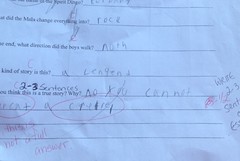
My son brought home his reading test with a love note for his teacher. "This is not a full answer." However to my frustration she didn't review with him what a FULL ANSWER IS. So in turn, that's my job, the parents job is to reinforce ideas the child is and is not learning. And while I feel that a "complete answer" should be reviewed in class, I am happy to do it as best I can at home. Not perfect, but the best I can do.

So when we finished homework assignments that night, I had one more assignment for my son to do.

1. Read the instructions (or in this case the message from the teacher): I read to my son what the teacher had written.

2. Check for Understanding: Then I asked him did he understand what the teacher meant? "Can you tell me what a full answer is?" He said no.

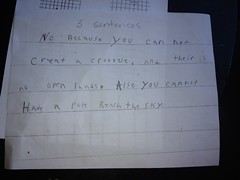
3. Explain the Idea (explain what needs to be learned as best you can, simply...) I explained, again, with out being upset or frustrated because THIS IS MY PARENTING JOB what a full answer is. "A Complete or Full Answer is when you write down on the paper everything in your brain about the questions. How does the teacher know what's in your brain if your don't write it down?" We reviewed that he should write 2 - 3 sentences about the question, and suddenly he remembered learning how to write a "short answer" in class.

4. Do the work! Even though my son didn't want to, when he saw me drawing with a ruler the lines on the back of his page, "Mom, what are you doing?"
I said "I would like you to write the answer correctly."
"But mom I don't have to, we don't have to correct our test, it doesn't count."
Ha! He is still learning how "moms way" works. I said you need to "learn from his mistake. Making mistakes is important, that's how our brains learn. But we need to correct our mistakes when we can so our brain re-learns the correct way. Start Writing."

How to Help with Homework, School Strategies by areyousureaboutthatblog
How to Help with Homework, School Strategies, a photo by areyousureaboutthatblog on Flickr.

In this photo you can see I drew three lines WITH A RULER (my son hates - or is lazy - about using his tools) so he can rewrite at home the proper answer that's "in his head." The next time he drew the lines, I cannot do this "work" for him.

The story the class read for the test was fresh in his mind. Even if we would have done this activity 1 or 2 days after the test, he would have been able to complete it. My son did have three ideas about the story he read. And he wrote three sentences (which he remembered was the maximum, "two is the minimum, mom"). If my son would not have remembered the story, I probably would've read him a short story and made up a question for him to answer. He still needed to DO the work.

5. Review The Work. We reviewed what he wrote. I asked him if he liked his new answer.

5a: Ask about their emotional state (this helps kids build confidence and make them feel good about learning and relearning from mistakes!). How did it make him feel? "Like I am smart." I said I felt "like you CAN show your teacher what is in your brain."

6. Review the old and new work. Compare them.  I read him his old answer and the new answer, and I asked him which one he liked best. He preferred the three sentences.

Learning from our mistakes IS one way to learn. As a parent I feel we just need to review school work and try to reinforce the ideas when papers come home with 100% or less. Homework is about doing the work not just about the grade.

No, my son did not have to turn in our correction - the purpose of this lesson was to learn how to do things correctly, not about the credit.


Make Mistakes. Breath, Reflect. and Laugh.Out.Loud

Thursday, February 27, 2014

What can parents do to help kids with Standardized Test Anxiety ? And now with the PARCC test too.

Standardized testing is a part of our educational system. And ISATs are the current hot topic. But there is a real issue here for me. My son, who usually isn't high anxiety is feeling EXTREMELY anxious about the ISAT. And anxiety is NOT the norm in our home. What can parents do to help kids deal with ISAT anxiety and testing? 

Some parents choose to opt-out their kids from taking the test, Sun Times Article and Progress Illinois. Most parents remain the all frustrating neutral and "do nothing," but I won't stand by and ruin my sons emotional well-being.


My parenting role is summed up in my blog introduction: "...and now I need to teach them some basic survival skills, so my children can be successful adults. These blogs are about my observations in our day to day lives, and how I use them as teachable moments." Are ISATs a teachable moment. NOT really, but they are an opportunity to help with some ANXIETY AND STRESS related coping skills.

I should say my "wife of a Principal perspective" is blended. Obviously I want to support my child and get the best education for them. And I want to support my husband and "tow the line" for the school. Can you say Dilemma? His perspective, while highly trained, and understanding of the "system" and often right, doesn't mean I agree. and so this blog post on my perspective and our home balancing act.

If you are reading this post, please post a comment below on what you liked - or didn't  - about this read. Does the topic interest you and you want to know more? Submit a question and I am happy to tackle it.

Here's some facts about ISAT from the CAN TV special presented by Friends of Goethe Elementary called "Is it time to ICE the ISAT."

This is not an endorsement / nor an opposition. Instead I like reading and seeing the issues from all sides. And this is one that is well versed: 

Fact: ISAT data is not used actively in teacher meeting. It's all quantitative. You shouldn't have to count and divide and get percentages to measure projects.
Fact: alternatives AUTHENTIC assessments work: project based, portfolio based, group projects, countless measures exist. These assessments aren't data based but they are real and credible.
Fact: prepping for the test squeezes time out of our school day. Remember the extra hour we fought for to add to our shook day... It's being wasted on ISAT prep.
Fact: teachers are in classrooms 7 hours+ a day with our kids. They know instinctively who "gets it" and who doesn't. We do need to rely on teachers, they are NOT the bad guys.
Fact: ISAT testing doesn't support modern teaching like differentiated instruction. A fill in scanted bubble test DOESN'T support differentiated instruction.  If a student John Doe isn't a good writer, or struggles in reading, ISAT DOES NOT measure his grade level knowledge. Period. 
WHY should parents care? If the above bullet point FACTS and information about the ISAT testing issue IS NOT enough, consider the impact on your child/ren(s) learning and what they LOSE during test prep. 
I think often as parents we "don't know" what we "don't know" (taken from the SWOT analysis) aspects of education system. And that's OKAY, your job isn't to be the expert. But you do need to know the minimum on what's expected: 
1. talk to you Child and 
2. Teachers. You can make a tremendous positive impact to help your child/ren.


This May or May not be you as a Parent: 

My favorite position in all this chatter is most of us, the parent who feels neutral. The no-action parent. The majority of parents aren't "opting out" of the test. The majority are simply going with the flow following the path as dictated by schools. I ask you, the neutral parent to consider your child' classroom. As a parent, I simply like to see what is and isn't happening as they learn. If my child is getting great classroom methods then I will be less stressed about testing.


What is your child/ren LOSING in their education (and sanity) when instead if school work they are working on ISAT test prep?  

  • Children aren't working in small groups
  • Children aren't working on projects
  • Children aren't learning new material
  • Children ARE being exposed to anxious teachers
  • Children ARE being exposed to teachers pushing them to do well on a bubble test.
  • Children should have teachers pushing them to do well on {INSERT ACTIVITY} instead of the mundane and outdated ISST test.
  • Children ARE feeling the anxiety if a test that simply ranks them. And this is the man reason I am taking action... With my kids.
  • Again remember that extra hour in the school day we all advocated for/against, ya it's being used for ISAT prep.
  • The ISAT issue is a beautiful problem, it addresses the problem of bubble test assessments, non-differentiated, non-stimulating, no data benefit assessments.  

Testing issues instead help us opens the conversation about what we SHOULD be doing in the classroom. Read here about Finlands no-assessment high-achieving-students educational system.
and additional scholarly articles on Finland's ed system.

This isn't the individual schools fault, the principals, or the parents on either side. It's an issue in education - how do we measure performance... and so the debate continues.


My (not usually) Anxious Son

So back to how this all started. In NOVEMBER my 3rd grade older son came home telling me "mom, I March we are taking the ISAT test. It's a very important test!" I didn't say much, or ask yet, "what does that mean son" and let it go. Nearly every month his teacher (who in my opinion is not at fault here) would give this same schpeal to the class. Over winter break something triggered him and for 3 days, instead of enjoying time away from school he was already feeling anxious about the test.

My Third Grader started worrying:
"What happens if I don't do well?"
"Will I get a bad grade?"
"Will I stay in the 3rd grade?"

I calmly reassured him, "Nothing will happen." And really nothing would happen. My replies:
"I'm sure you will do well."
"Why are you thinking you'll do badly."
"You get good grades and work hard on your tests and projects. Why would you do worse on the ISAT?"

He said "because it's [the ISAT] more important!" 

What? Now I'm frustrated! The ISAT IS NOT more important then your day-to-day work!! I explained this to him and in an uber calm tone of voice.

Granted this is anecdotal, but my Facebook and Twitter Feed is blowing up with friends and acquaintances from my professional life, consulting career, clients (and yes high school friends) from all races, income levels, and genders, who's kids are having anxiety about this test. This anxiety unites us. This frustration in our kids unites us NEUTRAL parents. 

The pressure Administrators and Teachers feel is bleeding all over our kids. Not in every school but in our last school it did. As adults in the school system they should KEEP QUIET about the "All important" test. Children DO NOT understand the "importance of it." It is Not a measure of children's performance. It is NOT a measure of the children. It is a measure of the Teachers and Administrators success in teaching what has been expected. Thus my frustration. My kid shouldn't be the one to fret or feel pressure. If he IS learning it will be so reflected.


What can Parents DO about the ISATs?

My older sons anxiety about ISAT is completely school driven! So I need to counter balance that anxiety with calm. I am not an overly calm person, so I work INTENTIONALLY to help ease his concerns.

My talking points with my son are below. But in this category - parents can do even more.

STEP ONE: Just one clickSimply sign the petition to end the ISATS - please click here to electronically sign the Scrap the ISAT in Illinois petition at Change.org and the petition is one the RIGH HAND SIDE of the screen. It IS EASY TO MAKE A DIFFERENCE!!

STEP TWO:
I tell my ISAT Anxious son:

  • I expect you to do your best on the ISAT.
  • I expect you to make mistakes on the ISAT just like we make mistakes in life everyday. (See my philosophy, which educational studies support drive, mistakes ARE how kids learn too).
  • Just like with all tests you must get a good night sleep and eat a big breakfast.
  • UNLIKE with all tests - this one you can't study for. For this test just do your best.
  • The ISAT IS NOT the most important thing in our life. We DO NOT prepare only for the ISAT. You sill have spelling homework, math home links, grammar and reading logs and book reports to complete. Not to mention your responsibilities at home and play time. We will First, work on our homework. Second, study for non-ISAT tests and spelling words. Then, if we have time we will review your ISAT practice sheets. (Since the intention of the ISAT is a measurement of what kids should "know," and my son is overall performing at an A / B grade level, we will focus on our work. That should suffice and I am following the intention of the test. As an aside, we believe in play based learning at home, here is a post on that way of learning in action withy kids and to more information on the subject.)
  • If you are struggling with certain concepts, simply "more hard work" isn't enough. We will look at new ways to teach you the concepts you need to learn (work with teacher as needed, but during ISAT). Effort + New Strategies + working Hard.
My job here is to stay level headed about this ISAT test, and help balance my sons life. I don't believe in opting out. Partially because the education system doesn't support it - kids are expected to play quietly in self-directed activities while the rest of the class preps for ISAT.

"Parents should be informed that there will be no alternate instruction 
given during the assessment and that children who are not being assessed 
will be required to engage in a silent, self-guided activity while their 
peers are being tested."


  • In addition, in our local neighborhood school we have nearly  ZERO parents opting out. This isn't an issue for my son I have to contend with and be teased by kids because he doesn't participate. Which we will probably not opt out. My son would get the social ramifications, not me.

I take this ISAT anxiety issue - because this is about my son and not the test - and treat is like any other problem we face. I help him cope with it. We talk about it. No he can't simply "blow it off" because in life we can't always run away from the problem. But we can face the problem and talk about options we have to deal with it.

ISATs are taking place next week. Since winter break my sons anxiety level has fallen... Leaps and bounds. He's still anxious, but on a scale of 1 (low) - 10 (high) he said he's about a 2 or 3. That's great with me! Again it's an important test for the school, therefore not HIS priority. He should try to do well, but it's not career ending is he fails. 

Original post February 25, 2014

Make Mistakes. Breath, reflect. And Laugh.Out.Loud


Friday, August 30, 2013

Hard work and Parent Child Contracts: Being Proactive to Stop the Homework Whining

My son is a bright boy. He is resilient, knows all about animals and there habitats, and a playful boy, acting our crocodile attacks on zebras with accurate animals noises included. But when it comes to his fine motor skills, he has really improved, however he won't be a calligrapher. Maybe via graphic design?

And I know with the latest technology, iPads are the future in "writing" reports, worksheets, and nearly all assignments. Especially by his high school days. My grandchildren probably will have a 3D Pinterest board titled "I don't know what this is:" that beams pictures like a hologram from their iPad v25. And the hologram will be of a Pencil!

But there's something to be said for hard work and perseverance. See my recent bank confusion and perseverance success here. And when we talk about homework and school tests, we don't praise the grade, we praise the work! We say "Good grade, your hard work studying (or reading or just doing homework everyday) really paid off." 

It's the end of the first week of school and his penmanship is legible... the teacher can "read the answer" which has always been our goal. When he brought home an assignment to complete yesterday, he was still falling into some bad habits. I bring the corrections to his attention: 

- "start words all the way to the left,
- use Capital Letters!
- we didn't finger space here did we?"

So what's a mom to do? Be PROactive an flip the script on my kid. I hate lecturing, because it doesn't work since kids can't follow the long train of thought... And I just get exhausted. So instead I make it a positive learning tool. 

For example: last year my older son  struggled to remember his homework responsibilities, so I wrote up a contract which we referenced nearly every day the first month of school - see the homework contract here. Instead of being REactive to his complaints at homework time, I anticipated the whining and instead I was PROactive by having him read the contract, outloud. After we put back packs down and changed our clothes, he'd come to the kitchen for snack time and he'd start reading te contract which was taped to the wall by his seat as he waited for the food.

So this year he knows the homework routine, and now we can focus on the details of what's expected in his work.

I found this graphic on the Internet which highlights Good Writing Habits. My color ink is Out on our inkjet, so we brightened it up the ol' fashioned way, with markers.


areyousureaboutthatblog Being a Better Writer, Starts Here...

This fabulous and small reminder will be where last years homework contract resided. And he'll have to read it everyday out loud before snack. Hopefully this ingrains the expectations to help in his results - better penmanship!

"What good writers do..."
 • They think about their topic.
 • They write neatly.
 • They use a Capital Letter at the beginning.
 • They use punctuation at the end . ? !
 • They use finger spaces.
 • They read it over and over.
 • They ask if it makes ? sense.

I hope this helps with our penmanship. Even tho iPads are the future of "writing" I think that this exercise in hard work, I get better results teaches my son to persevere!(? I hope!).

We've always said a few regular "reminders" for Older Sons penmanship:

  • Write Slow
  • Make your most BEAUTIFUL letters
  • When Assignments come home - we write the letter or the word 5 times, NOT 20!
  • We tell our son AND the teacher that "the teacher has to be able to read it to grade it!"
  • Please review your sheet and YOU find where you can write it Neater!


Well - at least the teacher thinks his work is improving!
areyousureaboutthatblog Teacher even likes his improved penmanship


The days are long, the years are short. Make Mistakes, Breathe, Reflect and Laugh.Out.Loud.

Friday, April 8, 2011

What to ask at Parent Teacher Conference

Ever wonder what to talk about at Parent Teacher Conferences. Especially discussion that is beyond the standard "how is s/he doing in class?" After doing some homework of my own, here are two questions that will easily get you a better answer then the standard  "s/he's doing well."


Two Questions to ask your child/ren's teachers at Parent-Teacher Conferences:

1. What will my son/daughter learn by the end of the school year?

2. What should we be working on at home?

Details about these questions are below.


Couple of tips for a successful Parent Teacher Conference.

1. Listen! This is the hardest one. As parents we are often overflowing with pride (or hiding under the desk) after what we hear from the teacher about our children. This is the Teachers time to TELL YOU about what happens with your child in THEIR classroom. I understand you might hear things you do not like. But try not to instantly "defend" your kid - or make excuses. First really try to see things from the teachers perspective. (Dont stop reading until you see Step 3.)

2. Acknowledge that you heard what the teacher said. This doesn't mean you agree. It just means you understand their concern/point.
- (If necessary) Tell the teacher you will discuss this topic with your child at home, then you can ask if you can set up a separate Conference at a later date if you still need to talk about your/their concerns later.


If you are reading this post, please post a comment below on what you liked - or didn't  - about this read. Does the topic interest you and you want to know more? Submit a question and I am happy to tackle it.


3. Try to be open and understanding. Stand out from the rest of the parents and don't be defensive about your child. Sometimes (surprisingly) our children act differently in the classroom. Regardless of why, my normally polite and outgoing child was relatively quiet (and rude) in class. Which can positive and negative, but how will I know if I don't listen to the teacher and try to understand.

4. Say Thank You to the Teacher. This teacher spends a lot of time with your child, and is hopefully addressing your kids needs. Depending on school before care and after care, teachers spend anywhere from a typical 7 hour school day with our babies to a whopping 10 hours... Say thanks - it can't hurt.

5. The teacher is nervous too (maybe). Even the most veteran teacher gets butterflies at parent teacher conferences. Every year its a new group of parents, a new batch of kids. So remember, you and the teacher might feel the same way. And you are there for the same reason, your little one.

These questions are suitable to ask not only the Lead teacher but also the specials teachers, including art, music, etc. Schools don't always habe a sign-up time with these additional yet equally important group, therefore seek them out. (Emails a great way to set up times in advance.)


Where should my child be in his school work at the end of the year?

Some answers you are looking for will include the major goals for the class by the end of the year. In Kindergarten, perhaps they should be able to write their first and last name legibly or have memorized 150 sight words. In 3rd grade teachers may look for essay writing skills or memorized the Multiplication table 0 thru 12. Many "goals" and things that our kids are learning are based on State standards (which is addressed briefly below). Obviously as schools integrate the 2010 Common Core legislation, those standards take precedence.

Be prepared to get a wide array of answers too. Some teachers may pull out the "guidelines" for the class showing you exactly what the kids learn week to week. My sons Spanish teacher showed me her lesson chart showing colors and numbers will be learned in the next two weeks and learning about animals in the upcoming month. She also reviewed the objective of the class (for our school it was) "exposure to a second language and not fluency."

Other teachers may simply answer with "here's what we a working on now (counting money or journaling) and by the end of the year "he should be able to write his first and last name legibly."


State Standards and Classroom Objectives

Most states have "state standards" which are the minimum in learning goals and objectives children need to have gained in their grade for that school year. These goals are organized by daily lessons, weeks, quarters, and through the end of the school year.  Your individual school, public, private, charter or otherwise will have additional standards to meet in their schools mission and vision. For example, a vocational school will have labor related tasks and concepts the students need to learn, where a catholic school has additional religious concepts the students learn.


What should we be working on at home? Or what can I do after school to help reinforce what's being taught at school?

This question serves a two fold purpose. First: it shows the teacher that you are interested and responsible in aiding in your Childs education. Homework (and after school study time) is critical to build healthy study habits and to reinforce / review what was learned at school during the day. (Homework however, in the Primary years, is not for learning new ideas. See this blog post where re-teaching math at home WAS WORKING, when it shouldn't have.) Secondly, this question helps to make sure the parent and teacher are "on the same page" regarding what work should be done at home.


It takes a village.... And It Looks Like Pieces of a Pie

Look, we all know that it takes a village to raise a child. I always explain my children's learning for me equates to how you view slices of a pie to equal a whole. A whole pie has many slices: one for what is learned in school, one for what we learn on the playground, one for home learning (which includes manners, self care, and reinforcing school learning at home). Other pie slices are other family members time and what kids learn (with grandparents, aunts, uncles), time with friends/outside/park, vacations and leisure time (yes, kids are always learning), and the "accidental learning" or teachable moments. Of course there's more then this simplicity to teaching and learning, and them add that we are also raising a child. Talking to their teachers is another piece of your child's learning pie - everyone plays a part in the schooling of our children - including you.

Make Mistakes, breathe, reflect and  Laugh.Out.Loud
Related Posts Plugin for WordPress, Blogger...

Search This Blog

PIN it